
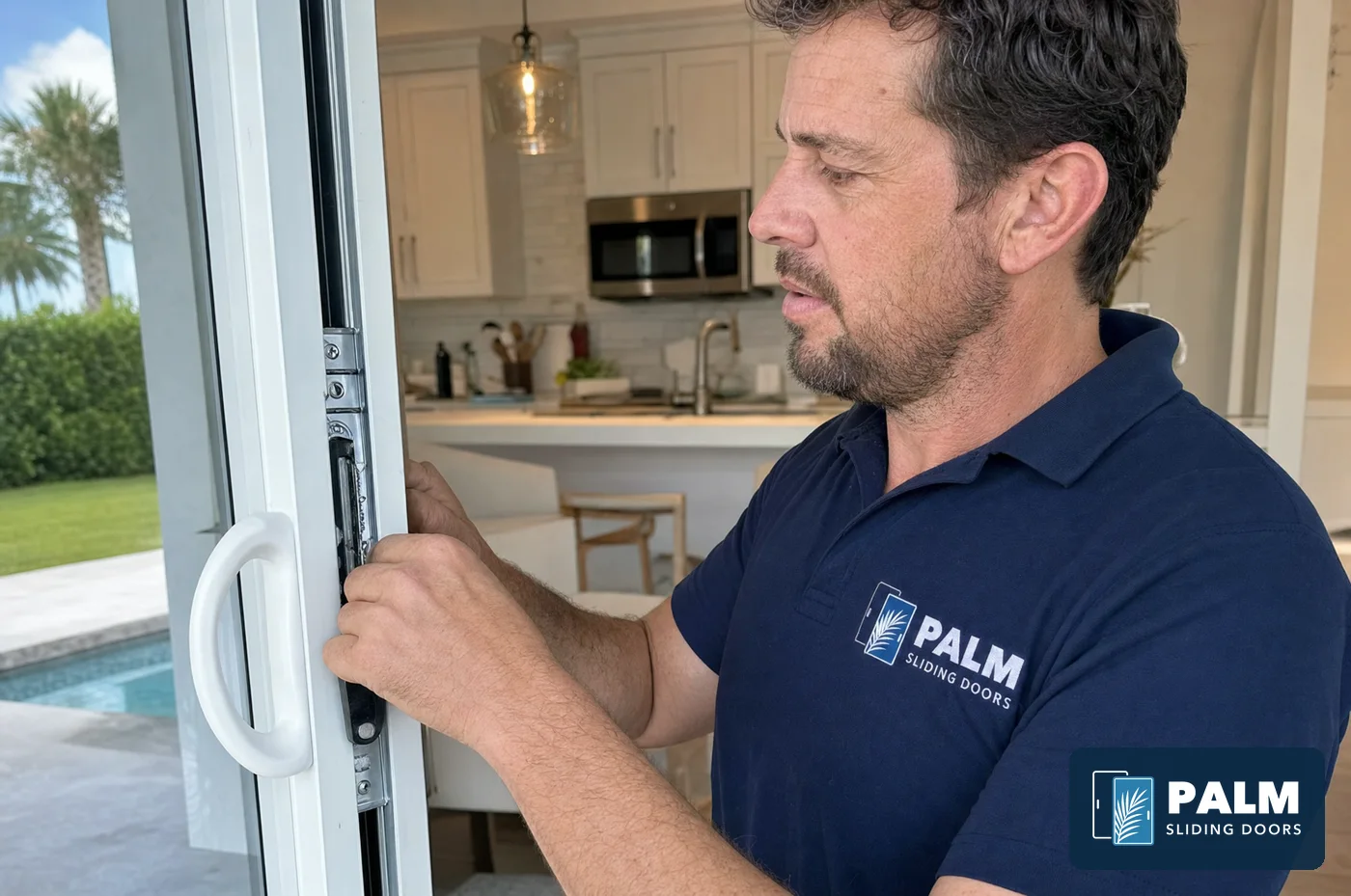
Sliding glass door lock repair in Tampa usually means replacing the mortise lock body inside the panel, realigning or replacing the keeper on the frame, or swapping a snapped handle, and it is a same-day repair in nearly every case because the common lock bodies and handles are carried on the truck. The exception that fools people: a lock that will not catch because the panel has dropped is a roller problem, and no new lock will fix it.
A sliding door that does not lock is an open door. This guide explains how a slider lock works, how it fails in Florida, what a repair involves, when replacement is smarter, and what security bars and secondary locks add.
How does a sliding glass door lock work?
Almost every sliding glass door in Tampa Bay uses a mortise lock: a small steel or zinc lock body set into a pocket in the vertical stile of the moving panel. Inside is a hook or a pair of hooks on a cam. When you flip the thumb latch on the handle, the cam swings the hook up and out through a slot in the panel edge, and the hook catches in a keeper, a steel plate with a matching slot fixed to the frame or to the fixed panel.
The handle is separate, bolted through the panel on both sides, with the inside thumb latch connected to the lock body by a small tail piece. Some doors add a keyed cylinder outside.
Three parts: lock body, keeper and handle. When the door does not lock, the job is to work out which has failed, or whether none has.
Why do sliding door locks fail in Florida?
Corrosion. Salt air gets inside the panel stile and into the lock body. The spring rusts, the cam seizes, and the hook stops swinging. Doors within a few miles of the bay or the Gulf, in South Tampa, St. Petersburg, Clearwater and Apollo Beach, lose locks to rust years before the same doors inland.
Worn hooks and cams. The hook is small and takes the whole locking load. The tip rounds off, the cam wears, and the hook no longer holds under pressure even though it looks engaged.
Broken springs. The spring that returns the hook is the first internal part to fail: the latch flips but nothing happens, or the hook drops back on its own.
Heat and plastic. Builder-grade doors in Riverview, Wesley Chapel and newer parts of Brandon often came with plastic handles. Afternoon sun on a lanai bakes them brittle, and the latch snaps off in your hand.
Dropped panels. Rollers wear, the panel sinks, and the hook can no longer reach the keeper. The lock is fine. This is the most common “lock” call we get, and the honest repair is rollers, not a lock.
Bent or loose keepers. A keeper that has been forced or whose screws have loosened moves away from the hook, and the lock engages on air.
Forced entry attempts. A levered lock or a door lifted against the head channel often has a bent hook, a torn keeper and a spread stile, and needs the full assembly looked at.
How do you tell what has actually failed?
You can run most of this sequence yourself before calling.
- Close the door and watch the hook. Look through the gap at the hook slot and flip the latch. If the hook swings up and misses the keeper, the panel has dropped. If it enters the keeper but does not hold, the hook or keeper is worn. If it does not swing at all, the lock body has failed.
- Lift the door as you lock it. If the hook catches when you lift the panel by the handle, the diagnosis is rollers. Have the rollers replaced and the panel adjusted; the lock will work again.
- Check the keeper. Push on it. If it moves, it is loose. Look at its slot; if it is torn or bent, replace it.
- Work the handle with the panel open. If the latch flips freely and the hook does nothing, the tail piece has stripped or the lock body is dead.
If forced entry is suspected, have the whole door inspected, including the anti-lift blocks, because a levered door is usually damaged in more than one place.
What does a lock repair involve?
Lock body replacement. The handle comes off, the two screws holding the lock body in the stile come out, and the old body is drawn out of its pocket. The new body must match the hook style, the mounting hole spacing and the handle spacing, and there are dozens of variations across the door brands sold in Florida. A company that does this every day carries the common bodies and can identify a rare one on sight.
Keeper replacement or realignment. A matching keeper is fitted and its height set so the hook engages fully. Loose keepers in corroded aluminum may need the holes moved or a backing plate.
Handle replacement. Handles are matched by the through-bolt spacing and the stile profile. Metal handles replace plastic ones on lanai doors that cook in the sun, and keyed handles can be fitted to doors that never had one.
Panel adjustment. Every lock repair ends with adjusting the rollers so the panel is plumb and the hook lands in the keeper without a lift. Skipping this is why cheap lock jobs fail.
All of that is same-day with parts from the truck on a standard door. Discontinued lock bodies from older aluminum doors on concrete block homes in Seminole Heights or Temple Terrace sometimes need matching and a return visit. Our page on sliding door lock and handle repair covers the service.
When should a lock be repaired and when replaced?
Repair the existing assembly when the lock body is sound and only the keeper is loose or misaligned, when the handle alone has broken, or when the real problem is the rollers.
Replace the lock body when the hook does not swing, when the spring has gone, when the hook is worn round, or when there is any corrosion visible inside the stile. A rusted lock body is not worth cleaning; it fails again within the year.
Replace the whole lock and handle set when the parts do not match, when the stile has been damaged by a forced entry, or when you want to move from a single hook to a multi-point lock. On an older door, upgrading the lock is often the most worthwhile improvement short of an impact door.
Replace the door only when the stile is corroded through or spread so badly that no lock will seat in it, which is rare and mainly seen on waterfront doors.
Do security bars and secondary locks help?
Yes, as an addition, not a substitute. The mortise lock should work properly first. After that, three additions make a Tampa slider meaningfully harder to force.
Anti-lift blocks. Small blocks or screws in the head channel that stop the panel being lifted out of the track. Many older doors have lost them, and restoring them is the single most effective security step on a slider.
A secondary foot lock or pin lock. A bolt on the moving panel that drops into the track or frame, so the panel cannot slide even if the mortise lock is defeated. It also lets you lock the door slightly open for ventilation.
A security bar. A rigid bar in the bottom track that physically blocks the panel from sliding. Simple and effective, though it has to be removed every time you open the door, which is why busy lanai households usually prefer a pin lock.
For the full picture, see our guide to securing a sliding glass door.
What does a lock repair quote depend on?
The written quote comes after a free on-site inspection and before any work. It depends on whether the job is a keeper, a handle, a lock body or all three, whether the lock is a common or discontinued body, whether the rollers are the real cause, and whether you want a secondary lock or anti-lift blocks added while the panel is out.
Palm Sliding Doors is locally owned and insured, based in South Tampa and serving Tampa Bay with same-day lock, handle and keeper repair, a free on-site inspection and a 1-year parts and labor warranty. If your door will not lock, treat it as urgent and contact us; a door that does not lock is the one repair not worth putting off.
Frequently asked questions
Why does my sliding glass door lock only catch when I lift the door?
The panel has dropped because the rollers have worn, so the hook sits below the keeper. New rollers and a panel adjustment fix it; a new lock will not.
Can a sliding door lock be replaced without replacing the door?
Yes. The mortise lock body, the keeper and the handle are all separate parts and each can be replaced on its own. Only a stile that has corroded through would call for a new door.
Is a broken sliding door lock a same-day repair?
Almost always. Common lock bodies, keepers and handles are carried on the truck. Discontinued locks on older doors may need matching and a return visit.
What is the best way to secure a sliding glass door?
A working mortise lock first, then anti-lift blocks in the head channel and a secondary pin or foot lock. Impact glass adds resistance to breaking. A bar in the track works but is less convenient.
Why do sliding door locks rust in Tampa?
Salt air and humidity get inside the panel stile and corrode the steel spring and cam in the lock body. Doors near the bay and the Gulf fail years earlier, and replacing a rusted body rather than cleaning it is the lasting repair.
Brandon homeowners can read about sliding glass door repair in Brandon, and the Brandon area hub lists the neighborhoods we reach same day.
References