
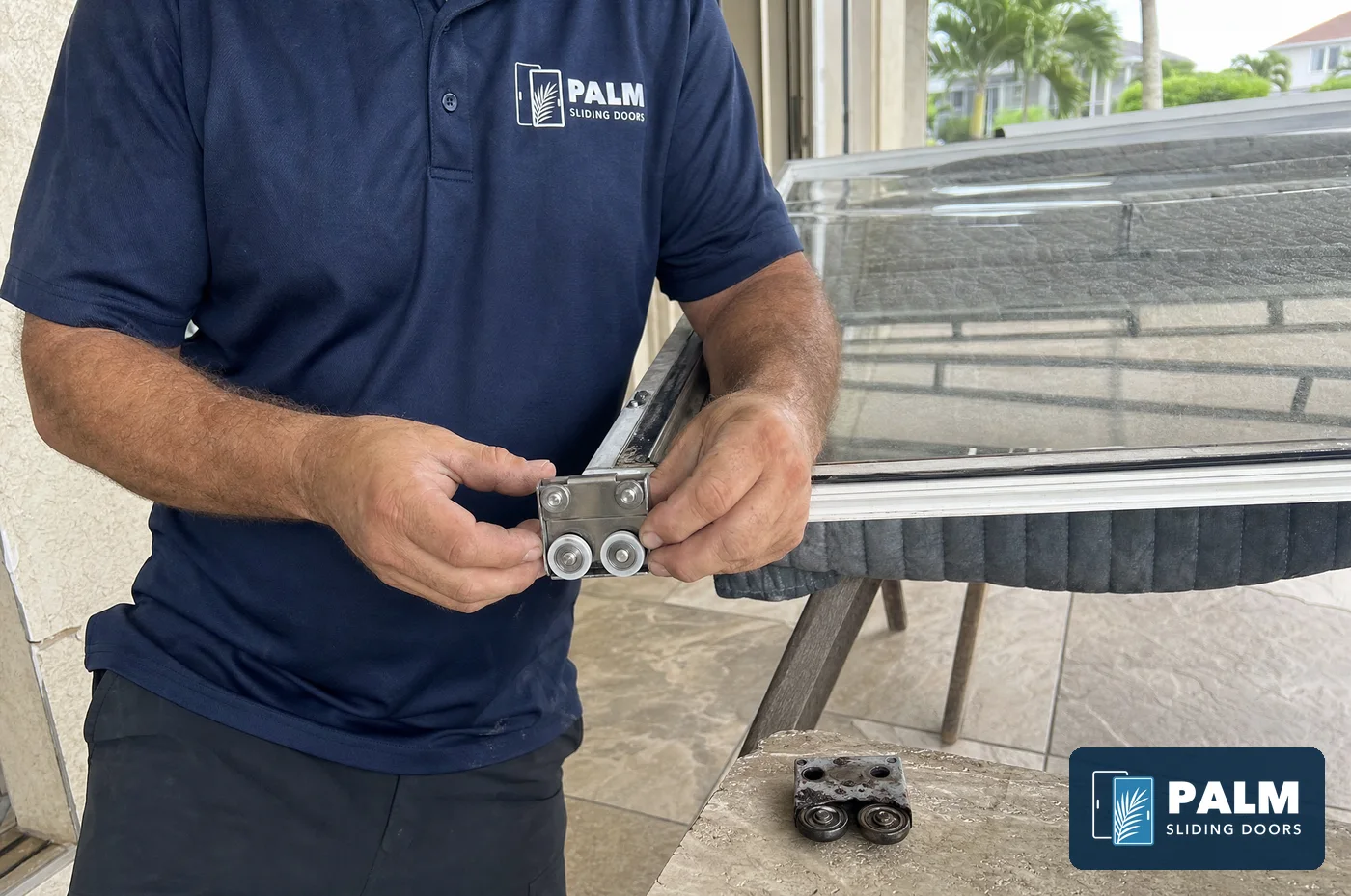
Sliding glass door roller replacement is the fix for a door that has become heavy, grinds along the track, or needs a lift to lock, and it is the single most common repair on any Florida slider. The rollers are two small wheel assemblies in the bottom of the moving panel, and when they wear out the whole door sits on the track instead of rolling over it.
This guide explains how to tell that the rollers are the problem rather than the track or the frame, why the cheap fixes stop working, what a proper replacement looks like from start to finish, and what to ask so the job lasts in Tampa Bay’s sand and salt.
What sliding door rollers actually do
The sliding panel of a glass door weighs far more than it looks. A standard six foot panel with tempered glass is heavy enough to need two hands, and an eight foot or laminated impact panel is a two person lift. All of that weight sits on two rollers, each with one or two wheels the size of a coin, riding on a raised aluminum rail in the bottom track.
Each roller is housed in a steel or stainless steel bracket with a spring and an adjustment screw. The screw raises or lowers that corner of the panel. When they fail, the panel drops onto the track and you are dragging a hundred pounds of glass across aluminum.
How rollers fail in Florida
Tampa Bay is hard on rollers for three reasons.
Sand and grit. Pool decks, beach trips and lanai gardens feed a steady stream of sand into the track. It works into the bearings and flattens the wheels.
Salt air. Within a few miles of the water in St. Petersburg, Clearwater and Apollo Beach, standard steel roller housings rust. The wheel seizes, the spring corrodes, and the adjustment screw locks in place.
Heat and humidity. Nylon wheels harden and crack, and the grease inside older bearings dries out and gums up.
Signs the rollers are the problem
Before you replace anything, confirm the rollers are the cause. These are the tells a technician looks for:
- The door is heavy after a clean track. Vacuum the track and wipe the rail. If the door still drags, it is not debris.
- The panel sits low. From outside, the gap between the bottom rail and the track is uneven or gone on one side.
- A groove in the rail. A shiny worn line along the top of the track means the panel has been riding on it.
- The lock needs a lift. If the hook only catches when you pull the door up as you close it, the panel has dropped below the keeper.
- Grinding or clicking. A wheel that has flattened thumps once per rotation. A seized wheel scrapes.
- The adjustment screw does nothing. If turning it a full turn does not raise the panel, or it spins freely, the roller has collapsed inside its housing.
If the door has all of these, the track is probably damaged as well, and the two are fixed together. If the door is fine but jumps the track at one point, the track itself may be dented or bent, which is a track repair rather than a roller job.
Why lubricant and adjustment stop working
Homeowners usually try two things first, and both are reasonable up to a point.
Lubricant makes a dry roller feel better for a few days. Then the oil attracts sand, the bearing gums up further, and the door is worse than before. A dry silicone spray on a clean rail is the only thing that belongs in a sliding door track, and it helps a healthy door, not a failed one.
Adjustment works while the roller still has a wheel that turns. Raising the panel takes the rail off the track and restores the glide. But you can only raise a roller as far as its spring and housing allow, and once the wheel has flattened or seized there is nothing left to adjust. That is the moment to replace.
How to replace sliding glass door rollers: what a proper job involves
Here is the sequence a technician follows, so you can judge whether the job you are paying for is being done properly.
- Identify the roller. There are hundreds of roller profiles across the door brands sold in Florida, and the wrong one sits at the wrong height or does not fit the rail.
- Remove the panel. The rollers are lowered fully with the adjustment screws, the panel is lifted into the head channel and swung out of the bottom track, then laid on padded stands. If the head channel has anti lift blocks, they come out first.
- Extract the old rollers. They are screwed or pressed into the bottom rail. On coastal doors they are often rusted in, and this is where the job takes patience rather than force so the rail is not damaged.
- Fit new rollers. In Tampa Bay that should mean stainless steel tandem rollers, with two wheels per housing to spread the load and steel that does not rust.
- Address the track. If the rail is grooved, a stainless steel cap snaps over it so the new wheels have a smooth surface. Putting new rollers on a damaged rail wears them out early.
- Rehang and adjust. The panel goes back in and each roller is adjusted until the panel is plumb, the interlock with the fixed panel meets, the weatherstrip seals along the full height, and the lock catches without lifting. This is the step that separates a repair that lasts from one that annoys you for another year.
- Test the lock and the screen. With the panel sitting at its new height, the lock keeper may need realigning, and the screen door is checked on the same trip.
A careful roller replacement on a standard door is a single visit. The quote depends on the roller type the door takes, whether the panel is a standard or heavy duty size, and whether the track needs a cap, and you should have that number before the panel comes out.
Choosing the right sliding door wheels
Not all replacement rollers are equal, and the difference shows up within a couple of years on a Florida door.
- Wheel material. Stainless steel wheels outlast nylon in sand and heat. Some doors take a steel wheel with a sealed bearing, which is the best combination.
- Housing material. Stainless steel housings do not rust. Standard zinc plated steel does, and near the coast it can fail before the wheel does.
- Tandem vs single. Tandem rollers put two wheels under each corner, halving the load per wheel. They are the right choice for any door heavier than a light six foot panel, and essential for impact glass.
- Matching profile. The roller must match the rail. A rounded rail wants a concave wheel; a flat rail wants a flat wheel.
FAQ
How do I know if my sliding glass door rollers need replacing?
Clean the track first. If the door is still heavy, the panel sits low, the rail has a worn groove, or the lock only catches with a lift, the rollers have failed.
Can I replace sliding glass door rollers myself?
It is possible on a light standard door if you can identify the exact roller and lift the panel safely. Most homeowners find the panel heavier than expected and the old rollers rusted in place, and the final adjustment is what makes the job work. Heavy and impact panels are not a DIY job.
How long does roller replacement take?
Most standard doors are done in a single visit, including a track cap and adjustment. Rare or discontinued rollers can mean a return trip once the part is matched.
Should I replace both rollers or just the bad one?
Both. They have carried the same door for the same years, and the one that has not failed yet is close behind. Replacing them together also lets the panel be adjusted level.
Will new rollers fix a door that jumps the track?
Usually, provided the track is sound. If the rail is bent or badly grooved, the track is capped or repaired at the same time so the new wheels do not catch in the old damage.
If your door has reached the point where the adjustment screw does nothing, book a sliding door roller replacement and we will match the roller, cap the track if it needs it, and adjust the panel so it closes with a fingertip. Not sure whether it is the rollers or something else? Our guide on how to fix a sliding glass door that won’t slide walks through the diagnosis.
References